A Quiet Release With Loud Consequences
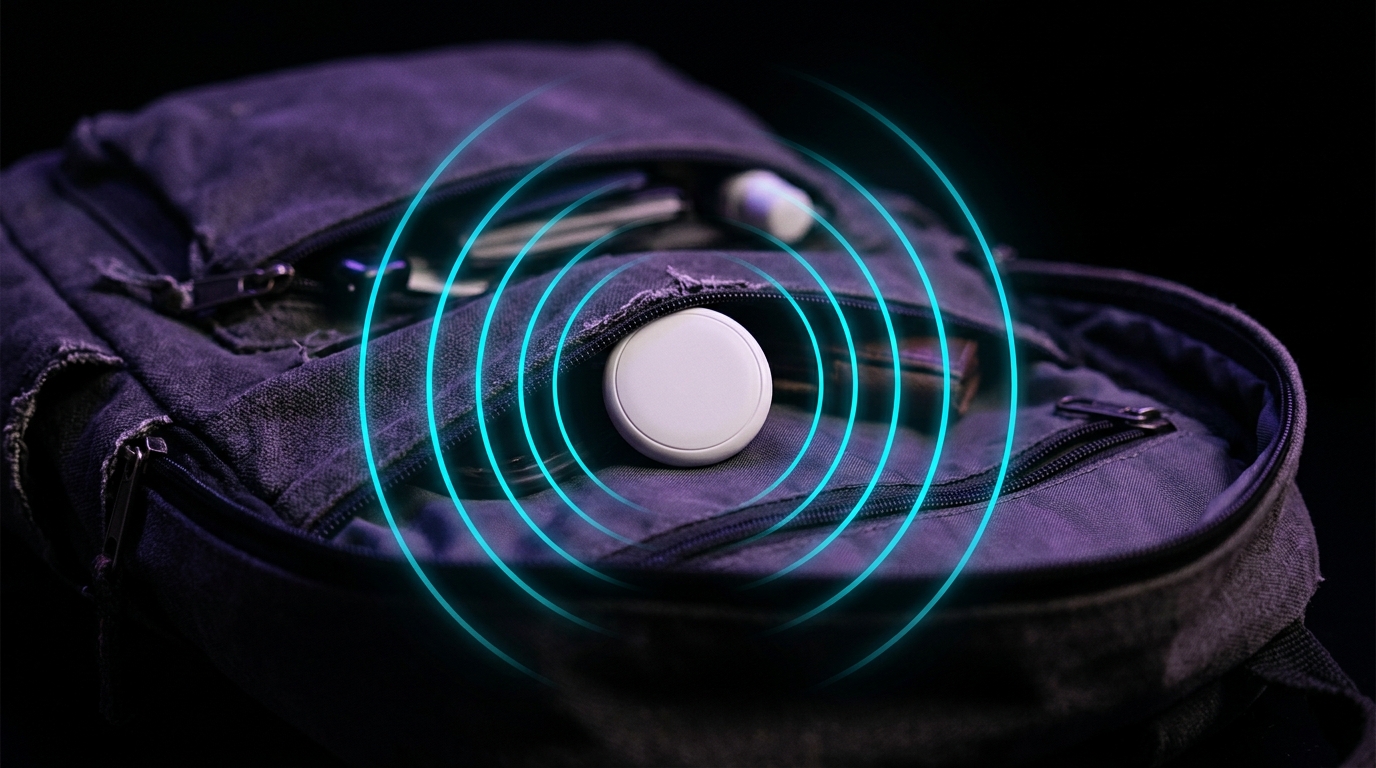
Apple replaced the AirTag in January 2026, five years after the original. It looks identical, costs the same 29 dollars, and the announcement focused on finding your own keys faster.
But almost every change also affects the other side of the equation: finding a tracker that someone else hid. Most of them, unusually, work in your favour.
If you scan for unwanted trackers, three things are different now.
What Actually Changed
Apple's own figures, from the announcement above and MacRumors' hands-on comparison:
- A second-generation Ultra Wideband chip, the U2, the same one in the iPhone 17 line and Apple Watch Ultra 3. Precision Finding now works from up to 50 percent farther away.
- An upgraded Bluetooth chip, extending the range at which the tag can be detected at all.
- A speaker 50 percent louder, audible from roughly twice the previous distance, with a new chime.
- Precision Finding available on Apple Watch Series 9 and later, and Ultra 2 and later, for the first time.
- It needs iOS 26.2.1 or later. The first-generation model was discontinued the same day.
Why a Louder Speaker Matters to You
Sound has always been the weak link in tracker detection. The original AirTag's beep was easy to lose under road noise, and a tag buried in a car seat or a bag lining could be missed entirely.
Twice the audible distance changes that. If you can trigger the sound, you now have a realistic chance of hearing it in a real environment rather than only in a silent room.
The second detail matters more. According to the hands-on comparison above, Apple secured the speaker module with additional adhesive, making it harder to remove. Prying the speaker out has been the standard way to mute a tag before hiding it — the trick spread widely enough that muted AirTags were sold ready-modified. That workaround just got harder.
Anti-stalking protection improved as a side effect of making the product better at its day job.
Why Longer Range Cuts Both Ways
Greater Bluetooth range means a tag reaches farther, which sounds like it favours whoever placed it. In practice it also means the tag becomes visible to a scan sooner and from farther away. A device that broadcasts more strongly is a device that is easier to notice.
The same applies to Precision Finding. It is Apple's own tool and works only with tags in your own account, so it will not lead you to someone else's hidden tracker — but the underlying trend, tags that are easier to locate at greater distance, is not exclusive to owners.
What Has Not Changed
The important part: nothing about detection strategy needs rewriting.
- The tag still uses Bluetooth Low Energy and still broadcasts continuously while separated from its owner. Any Bluetooth scan still sees it.
- Unwanted tracking notifications work the same way, and still arrive only after a period of sustained movement together. There is still no manual scan built into iOS — which is exactly the gap we wrote about here.
- Identifiers still rotate and stay encrypted. You cannot learn who owns a tag from its signal.
- Holding an AirTag to the back of a phone still opens a page with its serial number and the last four digits of the owner's phone number. That works on the new model too.
So the method from our guide to detecting hidden AirTag trackers still applies. What changed is that two of the steps — hearing the sound, spotting the signal at distance — now work better than they used to.
Practical Adjustments
- Trust your ears more than before. In a quiet car or room, the new chime carries. It is worth a listen before you start dismantling door panels.
- Do not assume silence means clean. A first-generation tag with a removed speaker is still out there in large numbers, and it will be for years. Silence proves nothing; a signal scan is still the reliable check.
- Expect a signal earlier. Improved range means the tag may appear in a scan before you are in the same room as it, so a strong reading no longer implies it is within arm's reach.
- Two generations coexist now. You cannot tell them apart visually. Assume either.
- Not every tag is an AirTag. Google's Pixel Tag goes on sale in November, and Google says tags built for its network work with the same cross-platform alerts; see what the Pixel Tag means for iPhone users.
The Honest Caveats
A Bluetooth scanner reads Bluetooth and nothing else. It will not find a hardwired GPS tracker, a Wi-Fi-only camera, or a tag whose battery has died. RSSI narrows a search down to a room, not to a coordinate, and it cannot tell you who is responsible.
And if you do find a tracker you did not place: photograph it where it sits, leave it there for now, and contact local law enforcement before removing it if you have any reason to believe you are in danger. Removal is visible to the owner. Our guide to AirTag stalking protection covers how to think through that decision.
General information, not legal advice — laws on tracking devices differ by jurisdiction.
Bottom Line
The second-generation AirTag is a better product for its owner and, unusually, a slightly better outcome for everyone else too. Louder, harder to mute, easier to pick up on a scan.
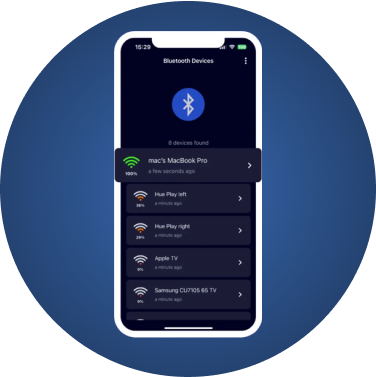
None of which helps if you never scan. iOS still will not do it on request, so that part remains yours: open FindMyGear, sweep the space, and read the signal.